


I've wasted money on plenty of things over the years.
But I've also made a few purchases that turned out to be surprisingly good investments.
Not because they appreciated in value.
Most wouldn't bring much at a yard sale.
But because they keep paying me back in time, energy, health, and productivity.
And that's an important distinction.
The best purchases aren't necessarily the cheapest. They're the ones that continue to deliver a return.
Here are seven of mine.
1. An Under-Desk Walking Treadmill
I spend a lot of time at my computer.
Writing. Studying. Planning. Researching. Answering emails.
And sitting in a chair for hours isn't exactly doing my body any favors.
So I bought a walking treadmill.
Not a full-size machine with a control panel resembling the cockpit of a Boeing 747.
Just a simple walking pad.
I also bought a separate adjustable desk that fits over it, giving me a place for my laptop while I walk.
Now I can work and get steps simultaneously.
I'm not sprinting through sermon preparation at four miles per hour.
Just walking comfortably while doing things I'd otherwise be doing seated.
And those steps add up.
Here's the optimization principle:
I didn't have to find more time to exercise.
I simply changed what I was doing with time I'd already committed to working.
Two benefits from the same block of time.
(Now, if I could figure out how to do that while sleeping, we'd really be onto something.)
2. An Old-Fashioned Sound Conditioner
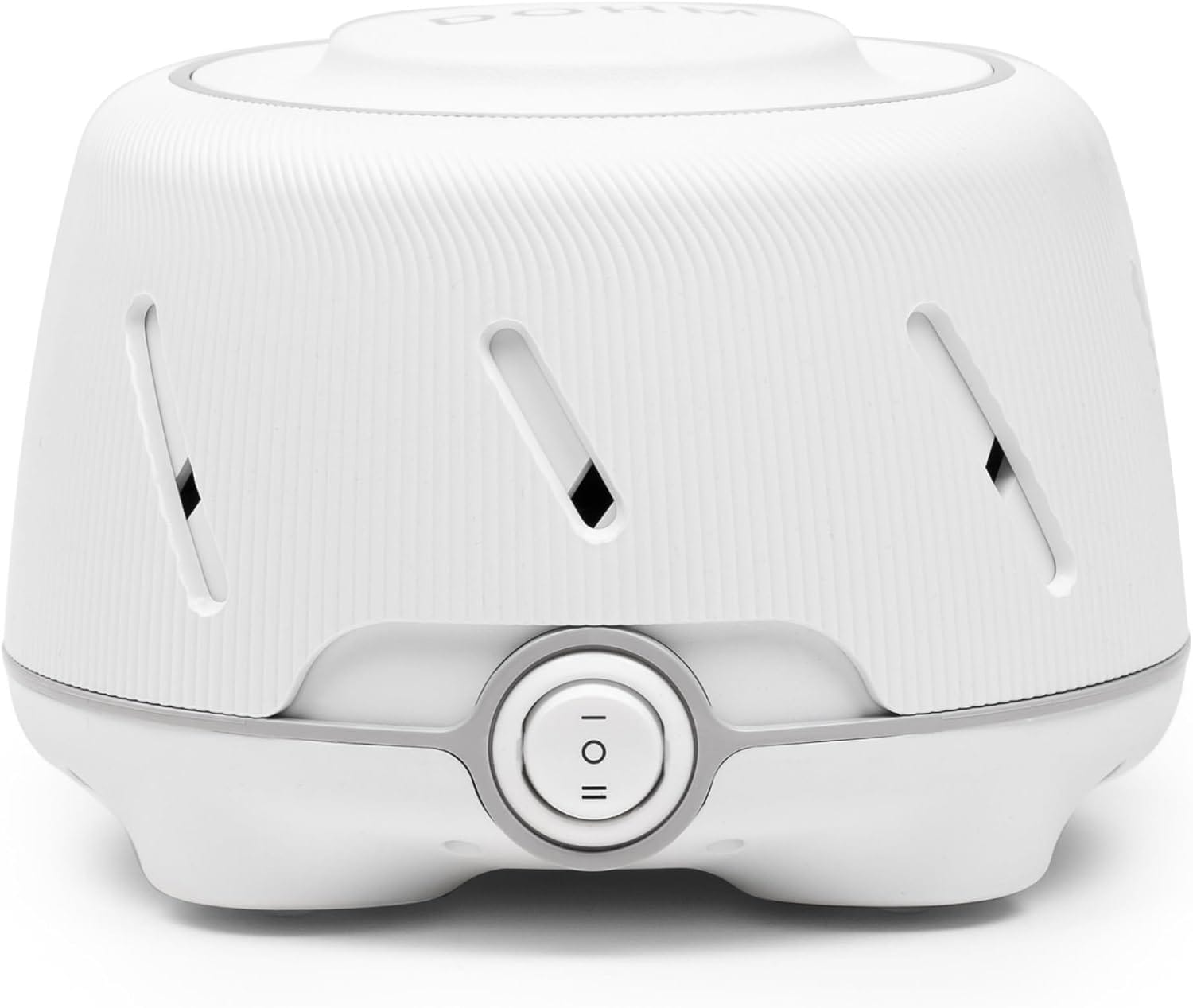
Imagine an upside-down dog bowl with a fan inside.
That's basically what this thing looks like.
No Bluetooth.
No app.
No subscription.
No simulated tropical rainforest featuring seventeen species of endangered birds.
Just a mechanical fan producing consistent, soothing sound.
We've been using one since 1996.
And I love it.
I've used sound conditioners for decades because they help mask little noises that interrupt sleep.
A door closing.
A car passing.
Somebody in the hotel hallway apparently rearranging furniture at 2:00 a.m.
And my ministry requires staying in alot of different places, so there's that.
The steady sound helps keep those interruptions from grabbing my attention.
And unlike so many modern gadgets, this thing does exactly what it's supposed to do without requiring a firmware update.
Better sleep means better thinking, recovery, and energy.
That's a pretty good return on an upside-down dog bowl.
3. A Sleep Mask
Speaking of sleep...
I travel frequently for preaching engagements, and I've discovered that hotels have wildly different definitions of a dark room.
Some have excellent blackout curtains.
Others leave a six-inch gap directly in the path of a streetlight.
And then there's the microwave clock, glowing across the room like the Star of Bethlehem.
I finally stopped depending on hotel designers to provide my ideal sleeping environment.
Now I bring my own darkness.
A comfortable sleep mask makes the room dark wherever I'm staying.
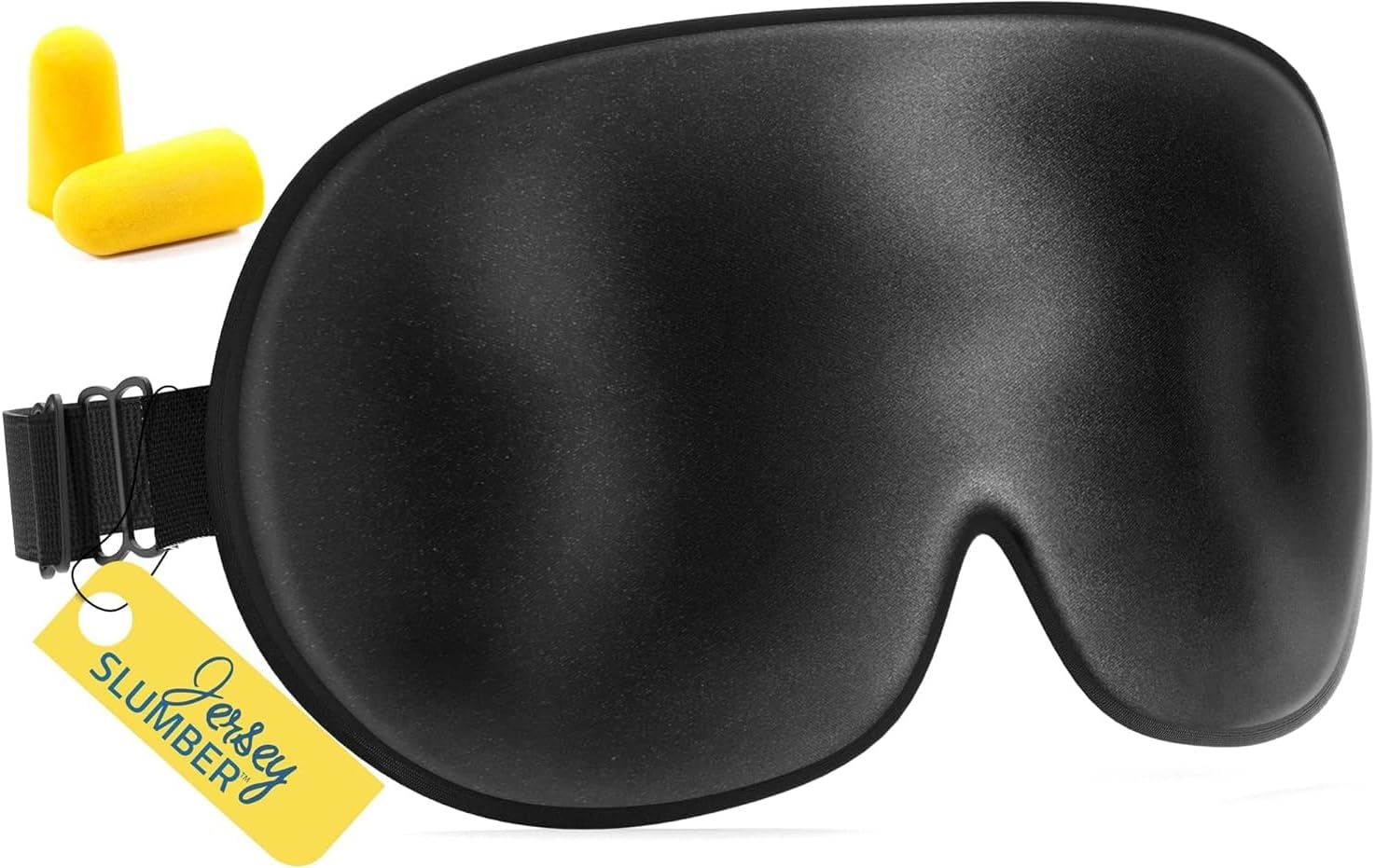
It's inexpensive, portable, and requires absolutely no maintenance.
I can't control every hotel room, light source, or travel schedule.
But I can control a few things that help me sleep.
And those small improvements compound.
4. My CPAP Machine
This one might be the least glamorous purchase on the list.
But it's also one of the most important.
I use a CPAP because I have sleep apnea.
And here's something that might surprise you.
A 2025 study estimated that 39.1% of American men—nearly 50 million—have obstructive sleep apnea, including diagnosed and undiagnosed cases.
There's nearly 2 out of every five chance you yourself have it.
How many pastors are walking around exhausted, struggling to concentrate, or waking up feeling like they never slept, without realizing their breathing is repeatedly interrupted during the night?
I was recently talking with a pastor who was reluctant to get a CPAP.
His objections?
The adjustment period...
And how he'd look wearing it.
Now, I understand that sleeping with a mask takes some getting used to.
My adjustment period was less than two weeks.
For some, it takes longer.
But the appearance objection?
I said:
"Brother, who cares how you look for a few hours in the dark compared to how you feel all day in the light?"
Nobody's handing out beauty awards at 2:00 a.m.
And if your wife is already asleep, your modeling career is probably safe.
(And if she can finally stay in the bed with you without hearing you snore, your marriage is safer too!)
Treating sleep apnea can improve daytime alertness and quality of life.
Not only that, your heart has to work way harder during apneas.
(Danger, bro.)
Sleep isn't wasted time. It's when your body and brain perform some of their most important maintenance.
Sometimes the biggest improvement you can make to your waking hours is fixing what's happening while you're asleep.
If you snore heavily or regularly wake up exhausted, talk with your doctor about getting evaluated.
Yep, these things require a 'scrip.
5. My Gym Membership
Technically, this is a recurring expense.
But it might deliver the greatest return of anything on this list.
I resistance train two to three times a week.
Not because I'm preparing for a bodybuilding competition.
I'm training because I want to remain strong and capable for decades to come.
I want to keep preaching, traveling, playing with my grandchildren, and serving the Lord without my body becoming an unnecessary limitation.
Strength training delivers benefits that extend well beyond the gym.
Better body composition.
Greater physical capacity.
Improved confidence.
And the satisfaction of seeing consistent effort produce results.
There's something refreshing about the gym, too.
The weights don't care how busy your week has been.
They don't respond to motivational speeches.
And they certainly don't form a committee to discuss whether lifting them is necessary.
You either lift them or you don't.
For pastors, this is stewardship.
Ministry demands physical and mental energy.
Taking care of the body that carries us through those responsibilities isn't vanity.
It's an investment in our capacity to serve.
6. An Air Fryer
I eat a mostly ketogenic diet, emphasizing protein.
Which means I prepare a lot of meat.
And one of the biggest obstacles to eating well is convenience.
When you're tired, hungry, and pressed for time, the path of least resistance often leads directly to a drive-through window.
Enter the air fryer.
Chicken. Steak. Hamburgers. Salmon.
I can prepare a satisfying meal quickly, without heating the entire kitchen or creating a sink full of dishes.
And because it's easy, I'm more likely to stick with the way I want to eat.
Sometimes the best way to improve your habits isn't to increase your discipline. It's to decrease the difficulty of doing the right thing.
When the healthy choice becomes the convenient choice, you've removed a major obstacle.
Incidentally, I still haven't figured out how to make waffle fries fit into my ketogenic strategy.
They do fit well in that air fryer.
I'm researching.
7. The Tesla
Obviously, the most expensive purchase on the list.
And certainly not for everybody.
But hear me out.
I drive a lot. Preaching engagements, ministry meetings, conferences, and other responsibilities regularly put me on the road for hours.
And driving is surprisingly draining.
And while gas prices climb higher than the third heaven Paul got to eyeball, I'm not talking about my wallet right now.
I'm talking about the drain of constantly monitoring traffic, adjusting speed, navigating unfamiliar areas, and dealing with the occasional driver who apparently received his license as a prize in a cereal box.
Enter... Tesla's Full Self-Driving (Supervised).
To be clear, it's not autonomous driving in the sense of I can write a dissertation (or take a nap) behind the wheel.
I remain responsible, must pay attention, and must be ready to intervene.
But no joke... it drives better than I do.
Having the system do 99% of the steering, speed, lane changes, and navigation makes long trips less mentally taxing for me.
I arrive feeling less depleted.
And when I'm traveling somewhere to preach, that matters.
Here's the distinction:
Not every worthwhile purchase saves you time. Some preserve your capacity during the time you're already spending.
A three-hour drive still takes three hours.
But arriving with more energy is a meaningful return.
Of course, the Tesla hasn't eliminated every travel expense.
I'm still perfectly capable of stopping at Buc-ee's and spending $47 on things I didn't know I needed.
Apparently, some problems require more advanced technology.
The Real Return on Investment
Notice what these purchases have in common.
They're not really about owning better stuff.
They're about removing friction.
Making movement, sleep, strength training, healthy eating, and travel easier.
So maybe the question isn't simply, "How much does this cost?"
Maybe it's also:
"What will this make easier, and how long will it keep paying me back?"
Obviously, financial wisdom still matters.
Convenience doesn't justify every purchase.
But sometimes refusing to spend money on the right tool costs us more in time, frustration, and energy than the tool itself.
So what's one purchase you've made that continues to pay you back?
And what's one thing you keep tolerating that a relatively small investment could improve?
Sometimes optimization isn't about working harder or developing another habit.
Sometimes it's about buying the right tool.
Just make sure it improves your life rather than simply occupying more space in your garage.