


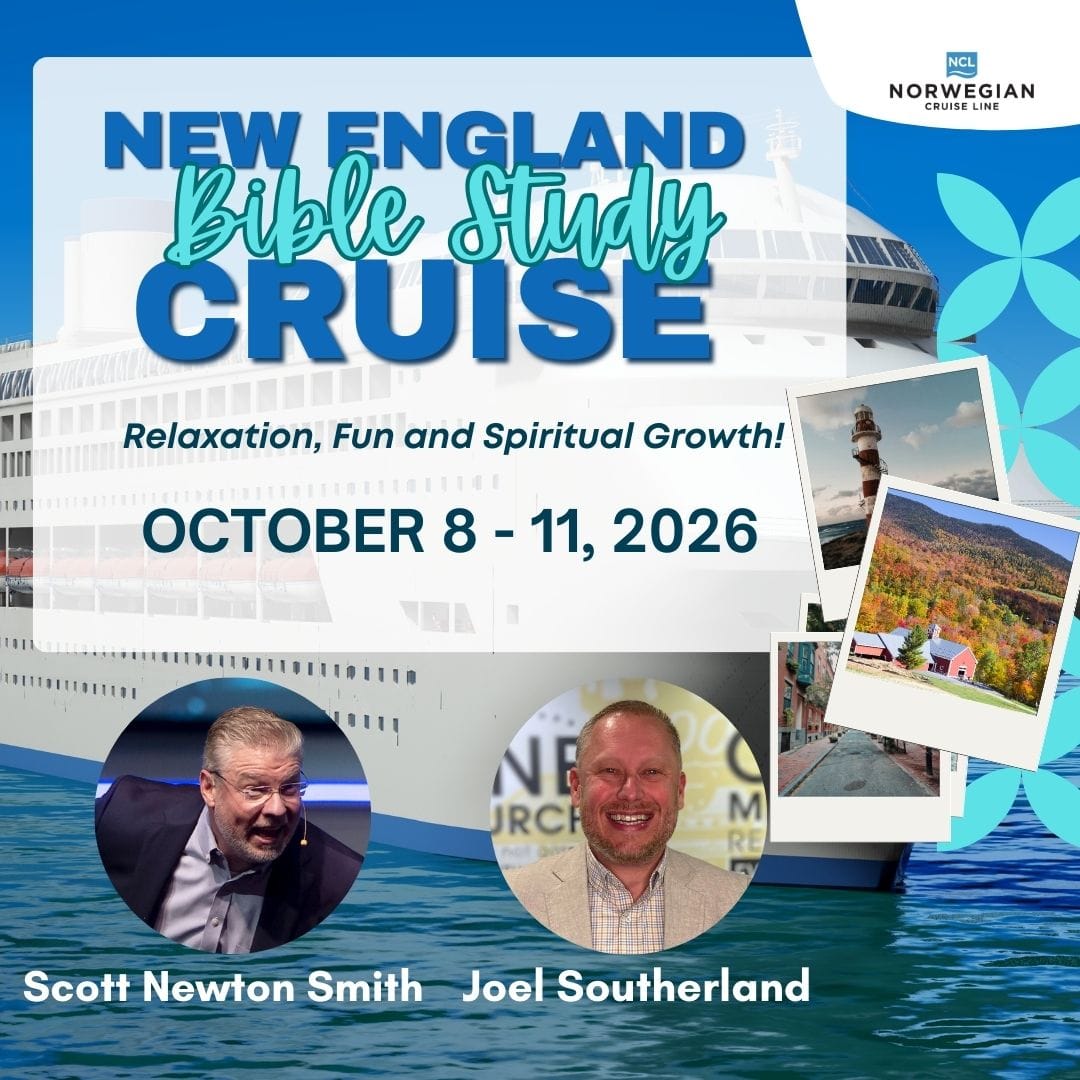
Come Go With Us!
Join Scott Newton Smith and Pastor Joel Southerland on a New England Bible Study Cruise this Fall.
A lot of pastors aren't in full burnout.
They're functioning.
Preaching.
Counseling.
Leading.
Smiling.
Answering texts.
Carrying the load.
(And pretending they're fine when someone asks "How are you?" in the church lobby.)
But underneath all that?
They feel on edge all the time.
Not collapsed.
Just tense.
Wired.
Reactive.
Tired in a way that a day off doesn't seem to fix.
(Especially if that "day off" involves three church members texting you about the worship setlist.)
That's often not just a spiritual issue.
Sometimes it's a nervous system issue.
Your body has absorbed so much pressure for so long that it no longer knows how to downshift.
So even when nothing is technically wrong in the moment, you still feel like you're bracing for impact.
Like Deacon Steve is about to walk around the corner with "just a quick thought" about the parking lot striping.
That shows up in a few common ways:
- You feel tired and wired at the same time
- Small frustrations hit harder than they should (someone moved your desk chair and now you're considering a resignation letter)
- You struggle to fully relax, even at home
- Your attention feels fragmented
- You feel spiritually duller than normal
Ministry can do this slowly.
Sermon pressure.
People problems.
Constant accessibility.
Too much screen time.
Too little movement.
Low-grade criticism.
Interrupted sleep.
Too much caffeine.
Not enough margin.
(And Sister Margaret's 6:47 AM emails about last Sunday's music volume.)
Stack that up over months or years, and your body starts acting like stress is the normal setting.
So what do you do?
Not something dramatic.
Something practical.
Here are 3 ways to begin resetting your system this week:
1. Build a daily downshift
You need a consistent signal that tells your body the day is changing.
That could be:
- sitting in silence before going inside
- a 10-minute walk after your work day
- a few minutes of prayer (with no phone in your hand)
- changing clothes as soon as you get home (pastoral polo off, dad mode on)
- listening to a couple of your favorite tunes on your porch or on a short drive
You cannot go straight from ministry intensity to family presence without a transition and expect your body to cooperate.
Your nervous system needs the memo that you're off the clock.
Even if you're technically never off the clock.
2. Reduce the digital static at night
If your evening is full of email, texts, news, and scrolling, your body never gets the message that it's safe to settle down.
It thinks you're still working.
Or worse...
it thinks you're watching the world fall apart in real time while sitting on your couch in pajama pants.
Try this:
For the last hour before bed, cut:
- email (yes, even the one from the elder board)
- social media (the comment section will still be there tomorrow, unfortunately)
- unnecessary screen time
- heavy decision-making
Replace it with:
- reading
- prayer
- conversation
- light stretching
- quiet
- dimmer lights
Your nervous system needs cues that night is for recovery, not reconnaissance.
And no, scrolling through sermon ideas on your phone at 11:32 PM does not count as "winding down."
3. Move your body on purpose
Walking and strength training are two of the most underrated ways to reduce stress and improve resilience.
Ok... "underrated" is understated.
It super matters, bro.
And you do not need a complicated plan.
You don't need to become a CrossFit pastor who posts workout selfies with Scripture references.
(Please don't.)
Start with:
- 10–20 minutes of walking most days
- 2–3 simple strength sessions each week
A stronger body is often a steadier body.
And sometimes the most spiritual thing you can do is stop treating your body like a ministry delivery device and start treating it like something that needs stewardship.
Also, being able to stand up from a low chair without groaning at age 57 is a legitimate ministry goal.
(And you might get your hope back.)
Let's be clear:
This is not about replacing prayer with physiology.
It's about remembering that you are an embodied person.
Your body affects your focus, your patience, your energy, your sleep, and your ability to recover.
So yes, pray.
Open the Word.
Trust God.
And also go to bed earlier.
Take the walk.
Lift something heavy.
Turn the phone off.
Drink some water.
Stop living like every text is a five-alarm fire.
(Spoiler: It's not. It's usually just someone asking if the church has extra tables.)
If you feel on edge all the time, don't automatically assume you're failing.
You may simply be overloaded.
And that can change.
Pick three simple resets this week and start there.
Your ministry may benefit more from a calmer nervous system than from one more productivity hack pretending to save your life.
Now go take a walk.
Before Sister Margaret sends another email.
More Resources To Help You Optimize
💊 My (Scott's) full supplement regimen